Discover Portbou
Portbou timeline: key dates in the town’s history
The history of Portbou can be read as a succession of accelerations. For centuries it has been a sparsely populated valley; in the 19th century the border and the railway…
Source last checked: 7 October 2026
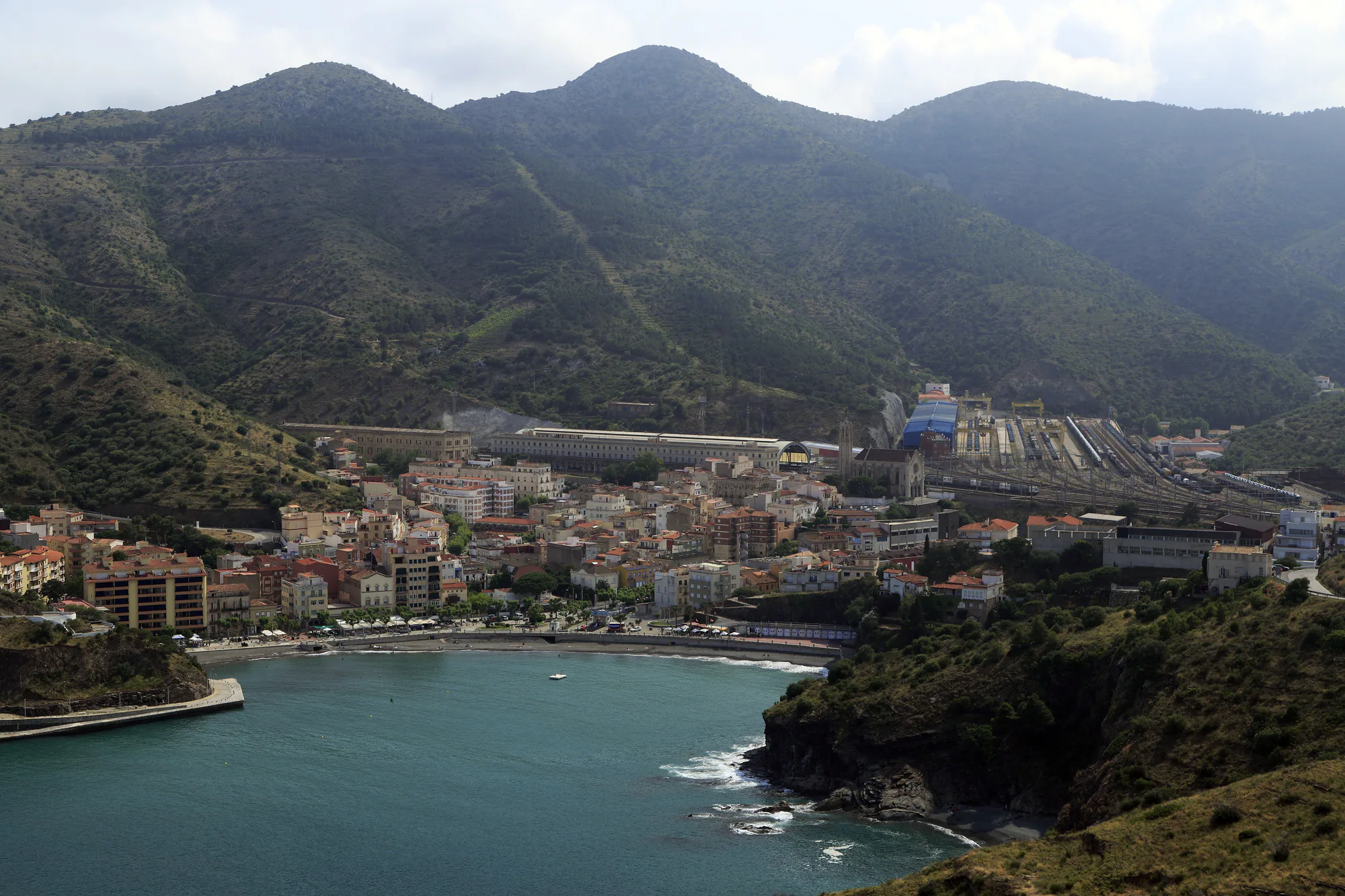
The history of Portbou can be read as a succession of accelerations. For centuries it has been a sparsely populated valley; in the 19th century the border and the railway transformed it into an international nucleus; the 20th century turned it into a scene of exiles, wars and European changes. This chronology does not replace monographic articles: it serves to place each layer in time.
Before the modern village
10th century. The municipal documentation places the rights of the monastery of Sant Quirze de Colera over the fish and the lands of the Portbou valley. Later, these rights pass to Sant Pere de Besalú.
1603. A map shows the form “Pt bo”. It is one of the proofs that the toponym predates the railway development.
1609. The Dietary II of Jeroni Pujades contains the form “Port Bou”.
1659. The Treaty of the Pyrenees places the state border on the northern ridges of the valley. The landscape that today unites Portbou with Roussillon also becomes a political line.
1802. A royal certificate allows the abbot of Sant Pere de Besalú to establish land on the Portbou mountain. The municipal source links this decision to the settlement and control of the territory.
1849. Portbou is still a small village: the municipal chronology speaks of twelve houses and six cabins.
1860. A small detachment of carabinieri is installed there. The border function begins to acquire a stable presence before the arrival of the train.
The great railway transformation
1864. The Spanish-French agreement that provides for the railway passage through the Belitres and Portbou pass is made public.
1877. The local chronology records 350 inhabitants.
January 20, 1878. The first train arrives and the Figueres-frontera section is inaugurated. This is the date that Badia Portbou adopts after comparing railway and institutional sources.
1879. Work begins on Santa Maria de Portbou, the neo-Gothic temple of Joan Martorell initially intended for the new community linked to the railway. 1885. Portbou organizes its first Town Council. In the same year, the cemetery is finished and the constitution of the Progrés Portbouenc lodge is documented.
1887. The population reaches 1,598 inhabitants. In just a decade, the change in scale is evident.
1893. Frederic Marès i Deulovol, future sculptor, collector and founder of the Barcelona museum that bears his name, is born in Portbou.
The Portbou of the 20th century
1918–1920. The municipal chronology places first the opening of the road between Llançà and Portbou and, two years later, the continuation to the border.
1929. The new international station is built which still dominates the railway landscape today. The large metal canopy is one of its most characteristic pieces.
1936. Portbou reaches 3,092 inhabitants according to the municipal chronology, on the eve of the Civil War.
1939. The Belitres Pass becomes one of the great steps of the Republican Retreat. The Democratic Memorial places the total number of people who left Spain during that great exodus at between 470,000 and 480,000; this figure is general and does not correspond exclusively to Portbou.
September 26, 1940. Walter Benjamin dies in Portbou after having crossed the Pyrenees fleeing Nazism. His death and subsequent memory will turn the town into a place of European cultural reference.
1941. The railway line is integrated into the new RENFE state network.
1964. Railway electrification is extended to Portbou.
1977. The double track of the corridor to Portbou is completed.
Europe changes the function of the border
January 1, 1993. The European internal market comes into operation. The abolition of many customs formalities at the internal borders directly affects professions and companies that had been part of the Portobuecan economy.
May 15, 1994. Passages, Dani Karavan’s memorial dedicated to Walter Benjamin and, in a broader sense, to exile, is inaugurated. July 22, 2000. The giants Perseus and Andromeda, the Moorish king Muf and the Portbou tadpoles are officially christened, a landmark of contemporary local popular culture.
A timeline to connect stories
Dates only have value if they explain processes. 1659 helps to understand the border; 1878 explains the railway explosion; 1885 shows the institutionalization of the new town; 1939 and 1940 make the border visible as a space of exile; 1993 shows how European integration modifies an economy built around border control.
To go deeper in each stage: