Discover Portbou
Customs, smuggling and the border: Portbou’s economy
For much of its modern history, Portbou has not only been close to a border: it has lived from the border. The control of people and goods, customs, carabinieri, specialized…
Source last checked: 7 October 2026
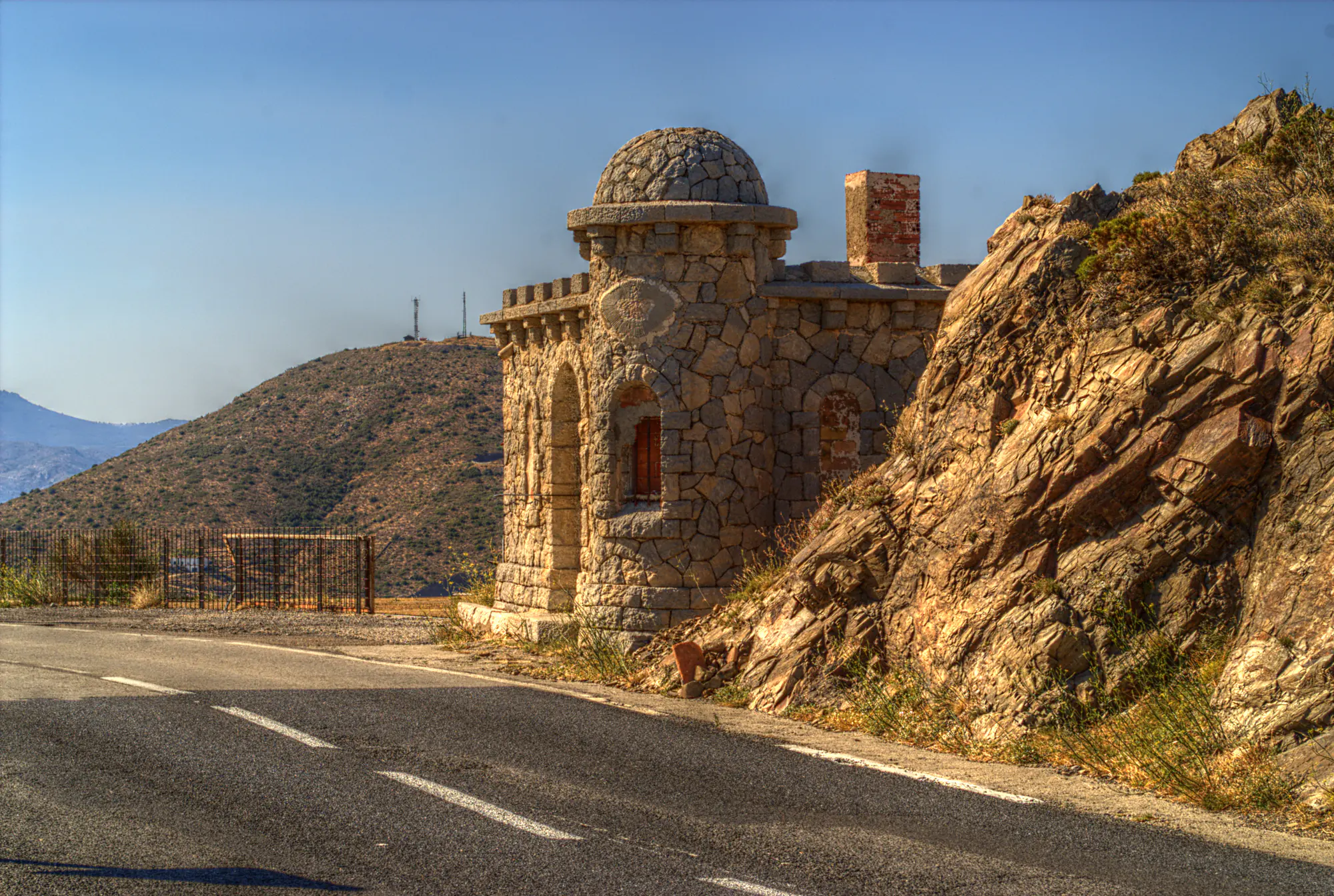
For much of its modern history, Portbou has not only been close to a border: it has lived from the border. The control of people and goods, customs, carabinieri, specialized agencies and associated services gave employment and urban form to the town. When Europe eliminated a large part of those formalities, the change was not only administrative; it affected a local economic structure built over decades.
Before modern customs: a difficult border to control
The municipal page on the origins places in the 18th century a sparsely populated valley frequented by fishermen, homesteaders and shepherds, but also by smugglers. The term appears in local documentation as an activity typical of a mountainous and maritime area where control was difficult.
It is not appropriate to romanticize this past. Smuggling is not a folkloric anecdote here, but an indicator of the function of the border: wherever there are tax differences, prohibitions or controls, strategies to evade them also appear.
In 1860, the first small detachment of carabinieri arrived in Portbou. The local chronology places it before the definitive railway decision and associates it with the beginning of a population increase.
The railway turns the border into infrastructure
The Spanish-French agreement made public in 1864 fixed Portbou as a border railway point, and the train arrived there on January 20, 1878. The municipal material of “Cultura de frontera” summarizes the consequence very well: the international station boosts the growth of the center and customs transforms the economy.
This transformation is visible in the demographics themselves: the chronology goes from 350 inhabitants in 1877 to 1,598 in 1887. We cannot attribute each new inhabitant directly to customs, but the temporal coincidence between railroad, border services and growth is too clear to treat as a secondary element.
Portbou becomes a place where you need to manage goods, documentation, transshipments, differences between rail networks and international traffic. An economy of specialized services appears around these functions.
The border as a place of work
An administrative border generates professions that disappear or change when the norm changes. Customs agents, railway staff, control services, transporters and local businesses are part of an ecosystem that would not exist in the same way in an inland municipality without an international crossing.
The municipal chronology expresses this directly when it looks towards the second half of the 20th century: it identifies the European Common Market as a process that would have very direct consequences for the future of Portbou and relates the European change of the early nineties to the disappearance of the town’s customs agencies.
1993: The key legal change
Here you need to specify the chronology. The municipal source associates the change with the Treaty of Maastricht and the year 1992. In legal and economic terms, however, the decisive point for internal customs formalities is January 1, 1993, the date of entry into operation of the European internal market.
Community regulations approved in December 1992 already explicitly warned that the abolition of customs formalities at internal borders would have significant repercussions on customs agents and on areas economically dependent on this activity. It was not an unexpected effect: the European Community itself provided adaptation measures for the profession.
Therefore, Badia Portbou separates two processes that are often mixed up: Maastricht is part of the great European political transformation of the nineties; the internal market of 1993 is the operational change that eliminates systematic customs formalities on goods between member states.
A border that does not completely disappear
Eliminating formalities does not mean that the border ceases to exist geographically or legally. Portbou remains a border municipality, the railway infrastructure continues to connect two state networks and controls may exist in certain legal contexts.
What changes is its daily function. Some of the tasks that justified companies and specific jobs are no longer necessary. This helps to understand why European integration, positive in terms of mobility and internal market, can also have local costs concentrated in territories that lived from the old controls.
The border as economic heritage
Today, the old facilities, the station staircase, the Belitres pass and the memory of the customs allow us to read an economy that no longer works in the same way.
This gives Portbou a special uniqueness: you can tell European history not only through treaties and capitals, but from a town where the changes in borders directly modified working life.
This reading complements the history of the railway and that of the origins of Portbou. Together they explain how geography, infrastructure and European politics have been redefining the town itself.