Things to do
A weekend in Portbou: a two- or three-day itinerary
Portbou can be visited in one day, but a stay of two or three days allows a different reading of the place. Instead of stringing together beach, memory, station and landscape in a…
Source last checked: 30 September 2026
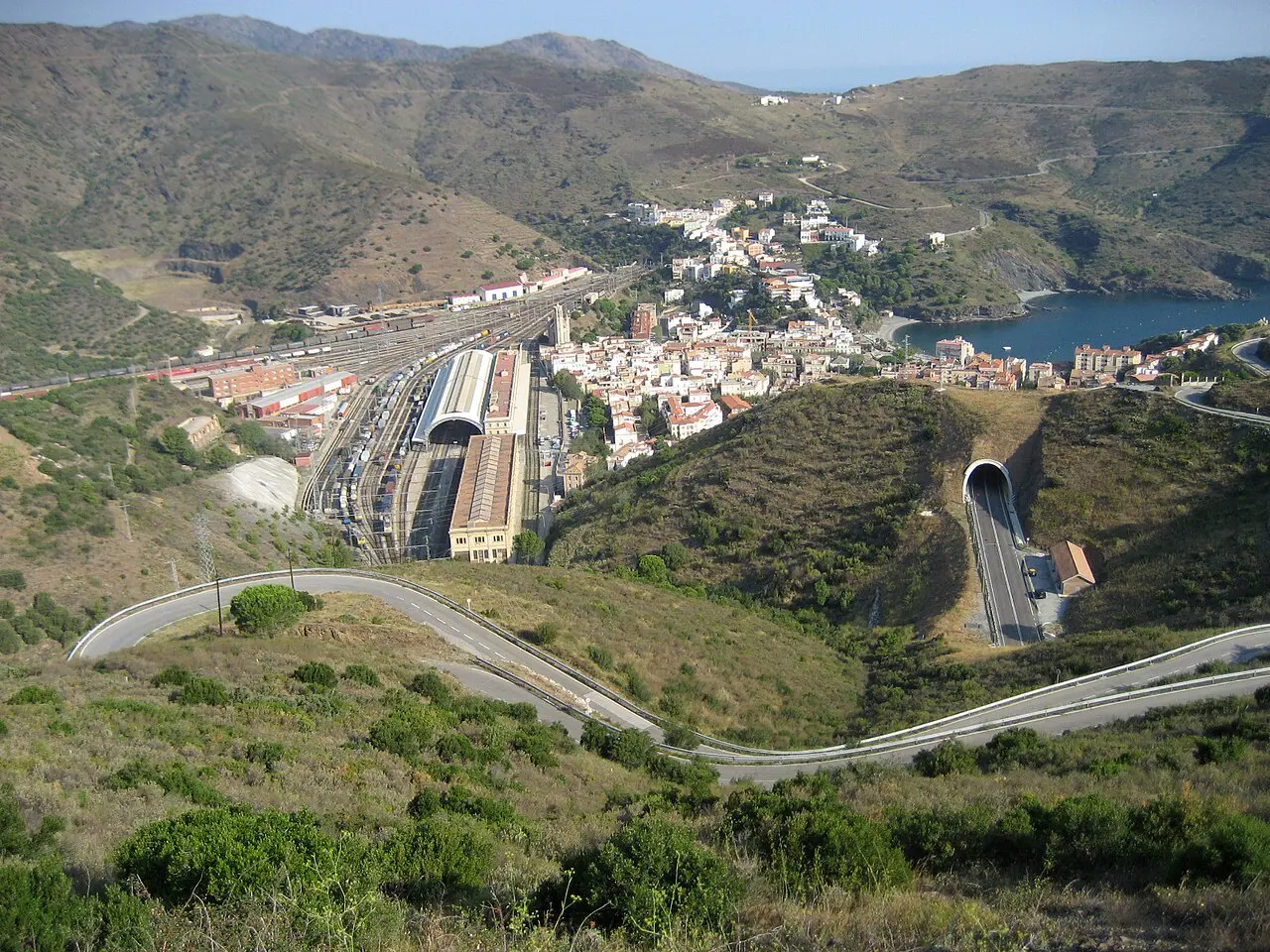
Portbou can be visited in one day, but a stay of two or three days allows a different reading of the place. Instead of stringing together beach, memory, station and landscape in a few hours, you can spread out the layers of the municipality and leave room to return to a place, adapt to the weather or simply walk without turning each exit into a goal.
This proposal is not a timetable. It does not set durations, distances or rigid bands. It originates exclusively from already verified sites and connections. The three technical hiking routes already have their own files and this synthesis does not duplicate their data.
Before you arrive: think of Portbou as a base
If the journey is made by train, How to get to Portbou without a car collects the R11, the RG1 and the rail connection with Cervera de la Marenda (Cerbère), always referring to the official planners for current timetables.
Staying to sleep changes the logic of the visit: it is no longer necessary to decide between the coast or heritage, nor to concentrate the memory of Walter Benjamin and the landscape in the same sequence. This is an editorial interpretation of the pace of the stay.
When we have all the verified data of the accommodation, The house will be the point where you can consult its characteristics, photographs and real conditions. Until then, we will not attribute to the home any view, equipment, capacity or service that the owner has not confirmed.
First day: understand the site before accumulating visits
The first contact can start with the landscape. Portbou occupies the coastal sector of the Sierra de l’Albera, where the Pyrenean relief reaches the Mediterranean and where the border with France forms part of the municipality’s own geography.
The article Portbou, where the Pyrenees meet the sea explains this territorial structure. Reading it before or during the first walk helps to understand why the station, the valley, the ridge and the bay are so visually related.
Afterwards, the sea front allows a direct and flexible approach. Platja Gran is the most urban area on the coast of Portbou and from its surroundings the promenade continues towards Platja Petita, les Tres Platgetes and Platja del Pi. There is no need to turn this continuity into an obligation to complete a tour. The Beaches and resorts guide allows you to decide how far to advance according to the conditions of the day. Les Tres Platgetes and Platja del Pi have a more natural character and are accessible on foot, while Platja Gran is integrated into the urban core.
In a stay of several days, a good option is to leave the first contact with the open sea: if the weather cooperates, extend it; if not, return to the center and book the coast for another day. This flexibility is precisely one of the advantages of staying in the same municipality.
Second day: memory and border
The second day can be dedicated to the historical dimension of Portbou. Walter Benjamin died here on September 26, 1940 after crossing the Pyrenees fleeing Nazism. His presence in the town has become a layer of European memory that must be treated with precision.
The visit can include the old Hotel de Francia, the cemetery and the Passages Memorial. The hotel is a private property identified externally by a plaque; in the cemetery there are several memorials, including a symbolic grave; and Passages, the work of Dani Karavan, is the memorial inaugurated in 1994 next to the cemetery.
At Walter Benjamin in Portbou we strictly separate documented facts, Lisa Fittko’s retrospective testimony, and memorial interpretations. We also indicate that the future Walter Benjamin Memorial Space of the old town hall is an approved project, but not a facility open on September 30, 2026.
There is no need to fill the rest of the day with more points of interest. The value of this part of Portbou is precisely to be able to pass from the cemetery and Passages to the sea and border landscape that gives physical context to the memory.
Incorporate the railway into the story
The international station deserves its own reading during your stay, even if you arrived by train. The Portbou railway history helps to understand the modern growth of the municipality and its border function. The documentation we checked places the arrival of the first train on January 20, 1878 and the new station in 1929.
We do not propose a specific duration to “visit” the station because it remains an infrastructure in use, not a conventional museum. The most interesting thing is to observe its scale and the relationship it maintains with the mountain, the core and the roads that continue towards France.
This view also explains why a stay of more than a day is useful: the railway is no longer just a means of arrival and becomes a part of the landscape that can be understood more calmly.
If there is a third day: extend without forcing
A third day does not need a new list of monuments. It can be used to return to the coast, delve deeper into one of the memory spaces or expand cross-border reading.
The rail connection between Portbou and Cerbère exists within the TER Occitanie and SNCF systems. If you want to use the train to cross the border, you need to check the actual service for the specific date and not rely on timetables reproduced in advance.
The three great hiking options already have their own technical sheets: the GR 92 from Portbou to Llançà, the E12 between Cervera de la Marenda and Portbou and the Querroig and Coll dels Belitres Loop. The sheets concentrate verified distances, gradients, notices and logistics; this proposal of two or three days avoids repeating them or turning any of the three routes into an obligation.
The advantage of not having to leave again every evening
A stay of two or three days has a practical value that does not depend on any specific attraction: it allows you to return to a base in Portbou itself after each departure and resume the visit the next day without turning the municipality into a quick stopover.
This is the commercial function that we want La casa to have within the web: not to appear as an advertisement pasted on each article, but as the natural base for those who decide to stay and get to know Portbou longer. When the accommodation sheet is complete, The house will have to explain only real and verified data.
The story is therefore simple: leave the house, discover a part of the municipality, return there, and the next day change registration. One day it may be dominated by the sea; another, for memory and the railway; a third may be open to the border or a slower visit.
An adaptable stay in Portbou
Portbou does not require a busy itinerary. Its uniqueness comes from the overlap of the Pyrenean landscape, the Mediterranean coast, the international railway and the memory of the border.
Spreading these layers over two or three days allows each one to have its own space. It also makes it easier to adapt the visit to conditions that we do not control: weather, sea state, railway incidents or possible hiking restrictions.
This proposal is not intended to prove that you “need” three days to see Portbou. It proposes something else: that, if you decide to stay there, there is enough context and enough contrast to build a coherent stay without inventing activities or filling hours artificially.