Discover Portbou
Frederic Marès: from Portbou to the world of collecting
Frederic Marès i Deulovol was born in Portbou on 18 September 1893 and died in Barcelona in 1991. He is best known for his sculpture, collecting and the museum named after him,…
Source last checked: 7 October 2026
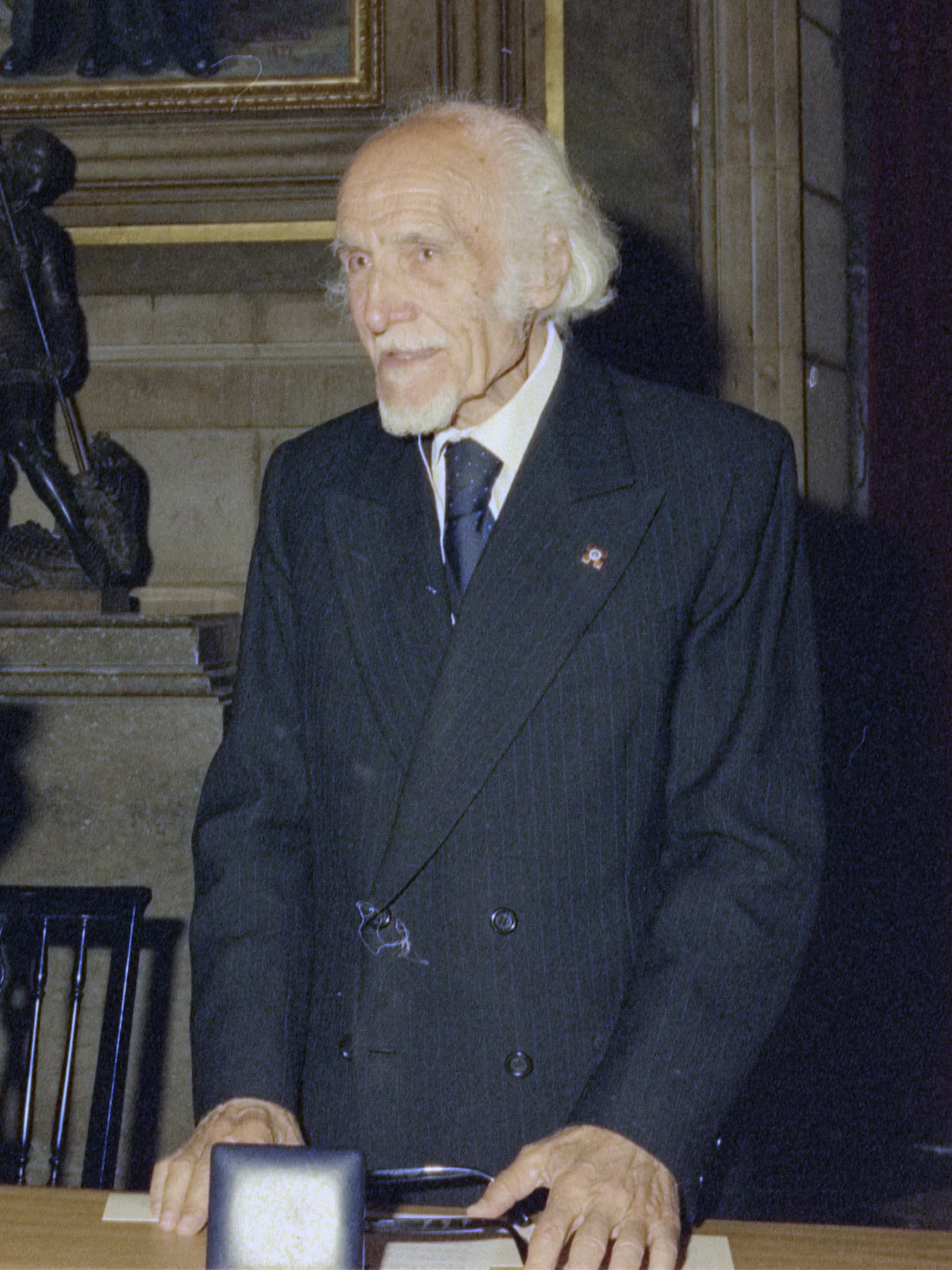
Frederic Marès i Deulovol was born in Portbou on 18 September 1893 and died in Barcelona in 1991. He is best known for his sculpture, collecting and the museum named after him, yet an important part of his early formation was rooted in the border town of Portbou in the late nineteenth century.
Childhood in a border town
The municipal biography describes Marès growing up in a family where books and collecting were part of everyday life. His father, Pere Marès i Oriol, worked at Portbou customs and encountered materials and publications moving across the border.
The Repertori de Col·leccionistes i Col·leccions d’Art i Arqueologia de Catalunya, published by the Institut d’Estudis Catalans, corroborates this background. It identifies his father as a customs official and explains how contact with imports, prints and books helped create a stimulating environment for the future collector.
It is an unusual connection: the customs office that shaped Portbou’s economy also figures in the cultural biography of one of Catalonia’s major twentieth-century collectors.
El Corresponsal del Coleccionista
From Portbou, Pere Marès published El Corresponsal del Coleccionista, a periodical and catalogue devoted to books, editions and collecting. The Museu Frederic Marès holds copies, including a documented issue published in Portbou in July 1892.
The municipal biography dates the periodical’s founding to 1884. The museum documentation examined contains an incomplete run beginning in 1892. We therefore distinguish the founding date from the earliest issue preserved at the museum.
This family activity helps explain why Frederic Marès’s interest in objects did not begin inside a museum. He grew up in a setting where finding, sorting, preserving and comparing items already mattered.
From Portbou to Barcelona
The family moved to Barcelona in 1903. Marès continued his artistic training and, according to the municipal biography, received a scholarship in 1912 from the Escola d’Arts i Oficis i Belles Arts, known as La Llotja, enabling him to pursue further studies and travel.
His career then extended far beyond Portbou. He established himself as a sculptor and collector, eventually assembling an exceptionally extensive collection of sculpture, objects, books and everyday artefacts.
Barcelona’s Museu Frederic Marès is the most visible institutional expression of this passion.
From private collector to museum
The municipal biography places an important early public presentation of his collection in 1946 and the museum’s opening, with its first fully arranged rooms, in 1948.
The museum’s current documentation continues to identify Marès as a central figure in twentieth-century Catalan collecting and preserves documents concerning both his activities and those of his father, alongside the artistic collections.
These stages trace a clear path: Portbou — border life and family bibliophilia — artistic training — collecting — museum.
A sculptor, not only a collector
Marès did more than assemble objects. Sculpture was central to his professional career, and Portbou retains a direct connection to this work.
According to municipal documentation, the altarpiece behind the altar in Santa Maria de Portbou includes an image of the Immaculate Virgin made by Marès.
For visitors, this adds an unusual biographical dimension: the town of his birth preserves one of his works inside a building emblematic of the railway-era Portbou in which he grew up.
Portbou as a cultural starting point
It would be an overstatement to claim that the border alone explains Frederic Marès. His career took shape chiefly in Barcelona and through contact with much larger artistic institutions.
But erasing Portbou from the account would be equally misleading. The sources agree on the importance of his childhood, his father’s interest in books and their links to customs and the objects passing through.
His story helps show that a border is not simply about control, transit or economics. It can also foster the circulation of objects, books, images and cultural curiosity.
For a broader perspective, Customs, smuggling and the border explores its economic role, while Santa Maria de Portbou preserves a material link to the sculptor’s work.