Discover Portbou
Querroig and megalithism: the oldest layers of Portbou’s landscape
Querroig is now one of Portbou's best-known hiking landmarks, but its significance predates marked trails. The ridge preserves layers of heritage reaching much further back than…
Source last checked: 7 October 2026
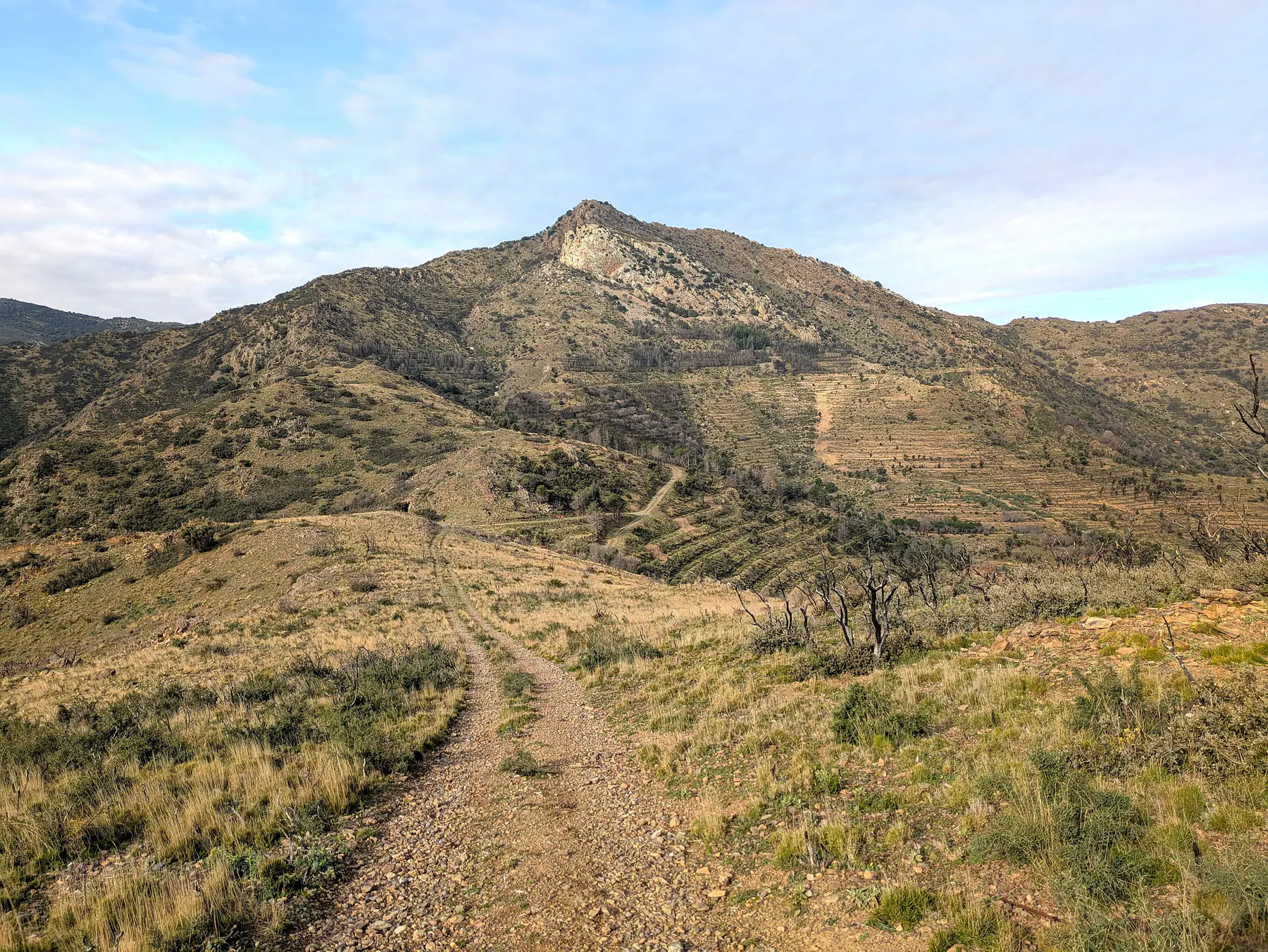
Querroig is now one of Portbou’s best-known hiking landmarks, but its significance predates marked trails. The ridge preserves layers of heritage reaching much further back than the railway: megalithic remains, a medieval castle and a later watchtower.
The dolmen at coll de la Farella
Municipal tourism material expressly identifies the dolmen at coll de la Farella as one of the megalithic remains in the Portbou area. This significantly extends the historical depth of the landscape: long before the modern state border, castles or railway lines, prehistoric communities had occupied these ridges and erected monuments here.
The municipal brochure does not give a precise archaeological date for the dolmen. Badia Portbou therefore avoids assigning it a specific century or chronology without supporting primary archaeological records.
This caution does not diminish its interest. Rather, it separates what is known — the existence of a locally documented megalithic monument — from what still needs closer investigation.
Querroig: a castle from the tenth and eleventh centuries
On the summit of puig de Querroig are the ruins of a medieval castle dating to the tenth and eleventh centuries, according to the municipality. The site lies where the territories of Portbou, Banyuls de la Marenda and Cervera de la Marenda meet.
Its location is a lesson in historical geography. The castle predates the modern border between Catalonia and France, although it occupies a ridge that would later become a political boundary.
Most of the ruins lie within Portbou, while their northern edge extends into neighbouring municipalities in Roussillon.
A later watchtower
A watchtower was built over the castle ruins between the fourteenth and fifteenth centuries. Querroig is thus not a site from a single period but a place reused because of its commanding position.
The visual advantage of a high ridge is clear. There is no reason to imagine a frontier identical to today’s: the site’s strategic value predates modern nation-states and reflects its capacity to overlook mountain passes, the coastline and valleys.
Heritage and hiking are not the same thing
The modern circular hike from Portbou to Querroig is demanding. It is documented by Itinerànnia and described in our guide to Querroig and coll dels Belitres.
This article has a different purpose. The route explains how to walk there; this account explains the historical meaning of the landscape along the way.
Keeping the two separate prevents archaeological and medieval heritage from becoming little more than stops on a hiking itinerary.
A ridge spanning many periods
Within a few kilometres, at least four historical layers can be recognised:
- the megalithic remains at coll de la Farella;
- Querroig’s medieval castle, from the tenth and eleventh centuries;
- the watchtower of the fourteenth and fifteenth centuries;
- the modern border, patrol paths and more recent movements between states.
These overlapping periods make the mountains of Portbou more than a scenic backdrop. They form a territorial archive of how successive communities inhabited, watched and crossed the ridge.
Look, understand and leave untouched
Understanding archaeological remains and ruins does not require visitors to interfere with them. Do not move stones, alter structures or build improvised cairns.
For hiking, follow current technical guidance, particularly during tramontane winds or periods of fire danger. For historical understanding, remember that Querroig existed long before the present-day border or the path leading to its summit.
Portbou has a history of coastline and railways, but also a history of ridges occupied long before the modern town existed.